Buenos Aires works well by car if you choose your hours and avenues with care. The city has fast axes that cross it from north to south and east to west, and streets that slow down at rush hour.
If you rent at Ezeiza or Aeroparque, the first drive sets the tone of the trip. Leaving with the destination loaded on your phone and the toll sorted avoids unnecessary detours.
Avenues and main axes
The city is laid out on a grid that breaks in several places. Wide avenues act as axes, while the rest of the streets follow with one way traffic and frequent lights.
General Paz avenue rings the city and links to the provincial motorways. If your destination is near the edge, going around is often better than crossing the centre.
The urban motorways, 25 de Mayo, Perito Moreno, Illia and Lugones, cross the city with few interruptions. They have tolls, so know that before you leave.
Avenues such as Rivadavia, Corrientes, Santa Fe and del Libertador organise many routes. They are slower than a motorway but usually leave you closer to your final destination.
Many streets are one way and change direction from block to block. A missed turn can force a long loop, so check the map before you turn, not after.
- Airport to the centre: motorway, then approach avenues.
- Centre to the north: del Libertador or Lugones, depending on the address.
- Centre to the west: Rivadavia or the motorway access.
Hours and traffic
On weekdays, the morning concentrates traffic into the centre and out towards the province. It eases a little at midday and builds again in the late afternoon.
If your flight lands at rush hour, allow more time than the map shows. An app estimates the drive, but it cannot solve an unexpected jam or a closed street.
Weekends follow another pattern: less commuter traffic and more movement near departure spots and shopping areas. Saturday night can be slow around bar districts.
Rain changes the math. Wet asphalt slows everyone down and traffic becomes less predictable. If it rains, allow extra time and keep more distance.
Parking in the city
In central areas parking is paid and usually has hours. Read the signs before you leave the car: some blocks are restricted, and some spaces are reserved for residents or loading.
Commercial car parks are a safe option for long stays. For a short stop, look for an allowed block and check the signs twice.
Neighbourhoods away from the centre have more street space, but also more day and time restrictions. A simple rule: if the sign is unclear, do not park there.
Do not park on ramps, corners or in front of a garage exit, even for a few minutes. A tow truck or a fine ruins the day more than a two block walk.
Common destinations and how to reach them
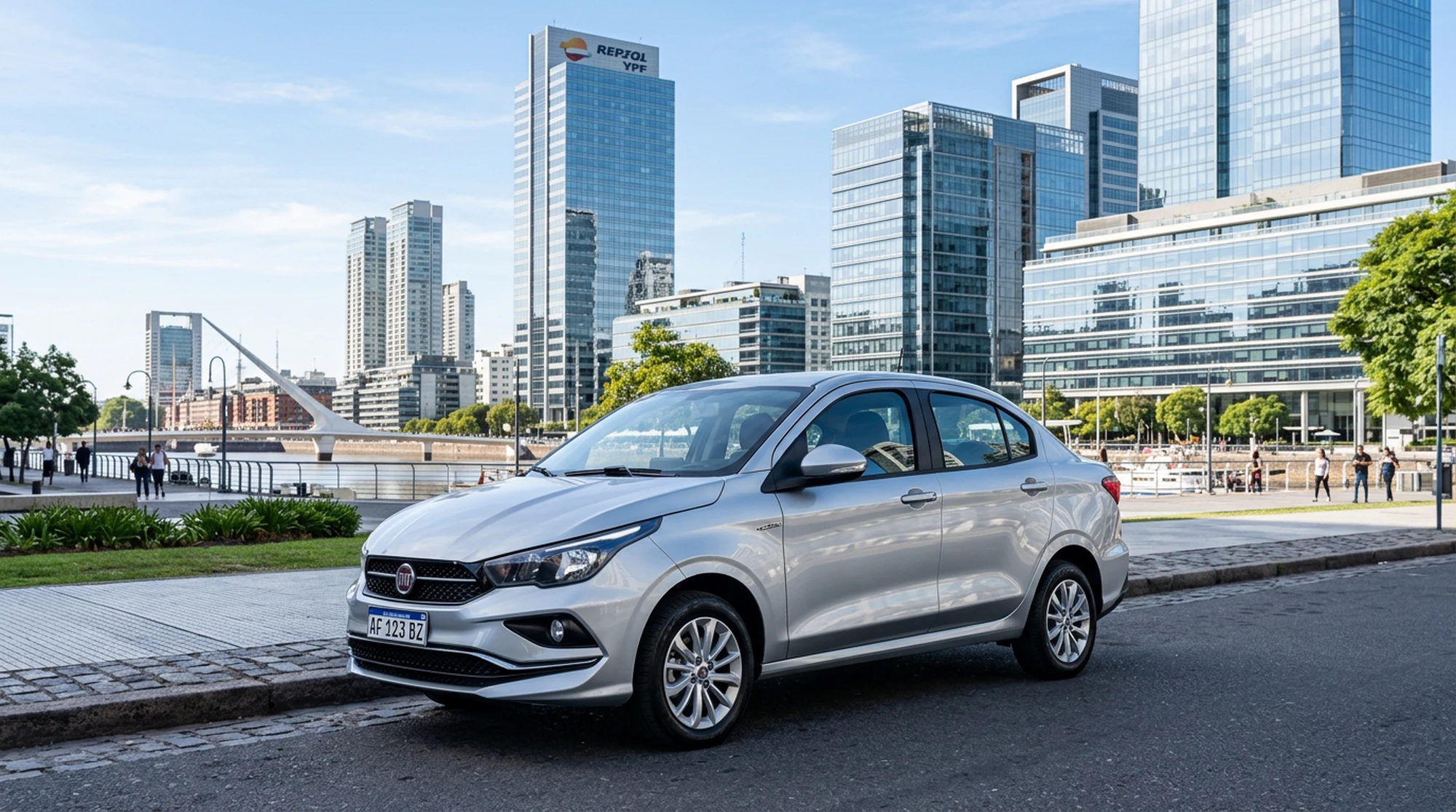
For the centre, the microcentro and Puerto Madero connect through avenues and the motorway. Around Plaza de Mayo and San Telmo, park in a car park and walk: narrow streets and traffic make street parking hard.
Palermo and Recoleta have clear axes, but also one way streets and confusing junctions. Arriving with the exact address and door number saves two or three laps.
If you are heading to a stadium or an event venue, check the area plan before leaving. Event closures change the route and do not always show on the map.
Navigation and the drive back to the airport
Use a phone holder and set the destination before you start. Reading a map while driving in an unfamiliar city is a bad combination, especially in traffic.
To return to Ezeiza or Aeroparque, add margin to your flight time and keep the booking confirmation at hand. The return is arranged in advance on WhatsApp.
Before driving to the terminal, check the fuel level and the general condition of the car. Arriving early avoids rushed decisions and leaves room to sort out any detail.
The quote sets out the daily rate, the deposit and the extras before you confirm, together with the return conditions. You can book your car or message us at +54 9 11 6592-0909. For airport pickups, see Ezeiza and Aeroparque. For a delivery in the city, write to contact.